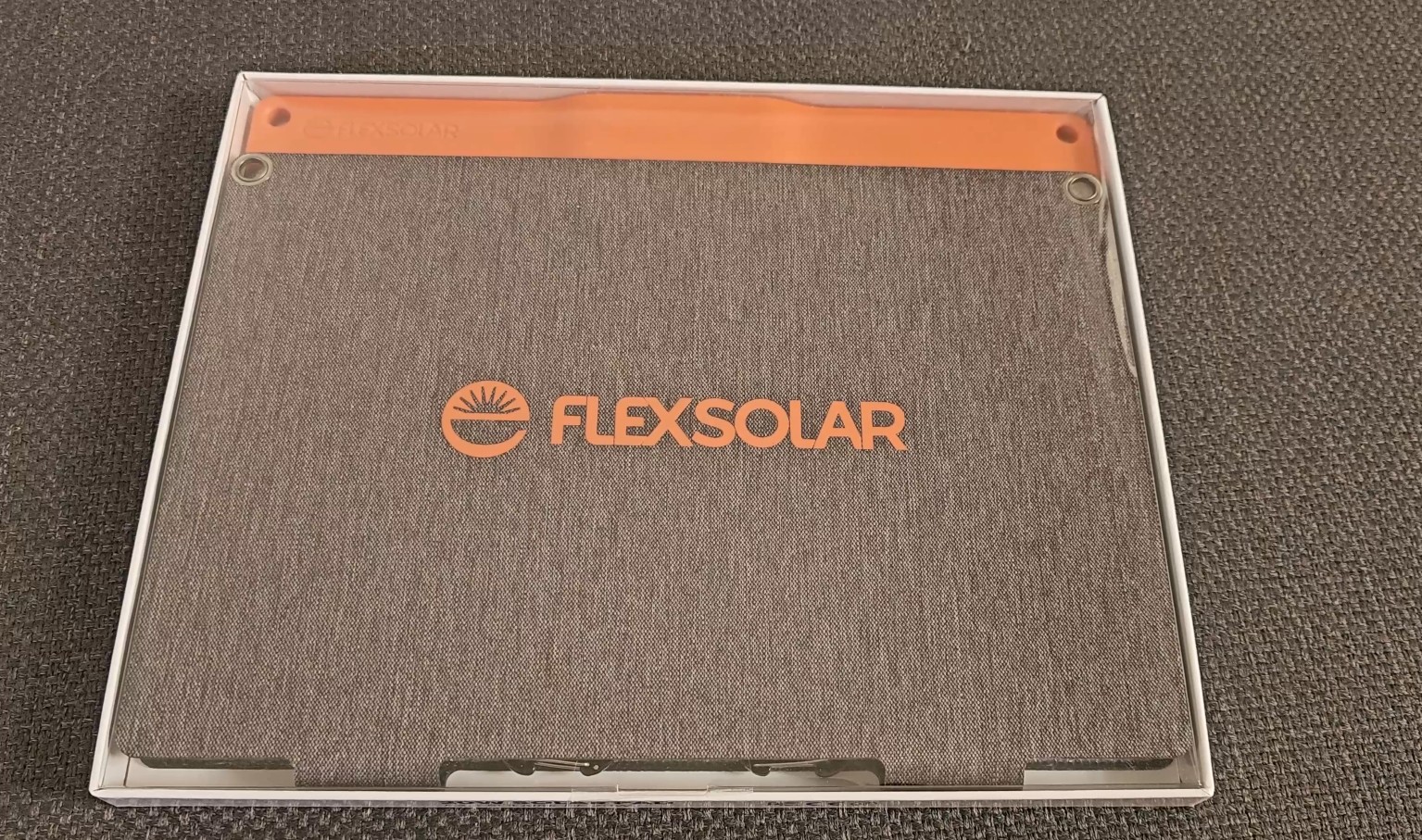
In the summer of 2024, I decided to test the FlexSolar S20, a 20W portable solar panel that promises great performance for hikers and campers. What I discovered during real-world testing left me deeply disappointed.
Advertised Specs vs Reality
The FlexSolar S20 presents itself with impressive credentials:
- Maximum power: 20W
- Conversion efficiency: up to 24%
- Solar cells: Monocrystalline A+
- Lamination: ETFE for enhanced durability
- Weight: only 600g
- Dimensions: folds down to iPad size
- Ports: USB-A and USB-C
- Protection: IP67 (panel), USB ports not protected
Real-World Performance: A Cold Shower
During tests conducted in August at 1:00 PM, the results were disappointing:
- Horizontal position: only 5W output
- Facing west: maximum 9W
- Facing south with optimal inclination: never exceeded 9W
This means the panel achieved less than 45% of its advertised power, even under the most favorable conditions.
Design and Portability: The Strong Points
Not everything is negative about the FlexSolar S20. The design deserves some praise:
Positive aspects:
- Extremely lightweight and compact when folded
- Robust construction with quality monocrystalline cells
- Includes carabiners for backpack attachment
- LED indicator showing charging status
- Two charging ports with automatic device recognition technology
Construction limitations:
- USB ports are not water-protected (IP67 only for the panel)
- Not recommended to leave it in the rain
- Lacks integrated stands for optimal positioning
The Efficiency Problem: What Doesn’t Work
The discrepancy between promised and real performance isn’t accidental. Several factors contribute to this disappointment:
1. Standard Test Conditions vs Reality
Solar panels are tested in laboratories under ideal conditions (STC – Standard Test Conditions):
- 1000W/m² solar irradiance
- Cell temperature at 25°C
- Air mass AM1.5
In reality, these conditions are rarely achieved, especially in temperate climates like Europe’s.
2. Reduced Size = Limited Power
With a surface area of only 0.18 m² when fully opened, the panel is physically limited in capturing sufficient solar energy to reach the advertised 20W.
3. System Losses
Between DC-DC conversion, heat generated by cells, and control circuit inefficiencies, a significant portion of energy is lost before reaching the USB ports.
Comparison with Competition
In the portable solar panel market, the FlexSolar S20 isn’t the only one suffering from this problem. Many manufacturers adopt aggressive marketing promising power outputs that are difficult to achieve in real conditions.
More honest alternatives:
- 40W+ panels offer more stable performance
- Bifacial models can capture up to 25% additional energy
- Panels with integrated PWM controllers tend to be more efficient
Verdict: Adequate but Disappointing
Despite performance below expectations, the FlexSolar S20 remains usable for its primary purpose: charging smartphones and small devices during outdoor activities.
Pros:
- Exceptional lightness and portability
- Solid construction
- Sufficient for charging a phone
- Competitive price
- Ease of use
Cons:
- Real power much lower than advertised
- Inconsistent performance
- Non-waterproof USB ports
- Lack of positioning accessories
Conclusions and Recommendations
The FlexSolar S20 represents a perfect example of how marketing can create unrealistic expectations. While the real 9W are sufficient to charge a smartphone, the difference from the promised 20W is too significant to ignore.
Who should buy it:
- Occasional hikers needing emergency charging
- Users with realistic performance expectations
- Those prioritizing weight and portability over maximum power
Who should avoid it:
- Users needing fast charging
- Those wanting to power high-consumption devices
- Campers requiring consistent reliability
My Advice
If you’re looking for a portable solar panel, consider these factors:
- Always halve the advertised power to have realistic expectations
- Prioritize 40W+ panels if you want stable performance
- Read reviews with real testing like this one, not just manufacturer specs
- Consider the real weight/power ratio, not the advertised one
The FlexSolar S20 remains an acceptable product for occasional use, but disappointment over promised but undelivered performance is inevitable. In an ideal world, manufacturers should be more honest about the real performance of their products.