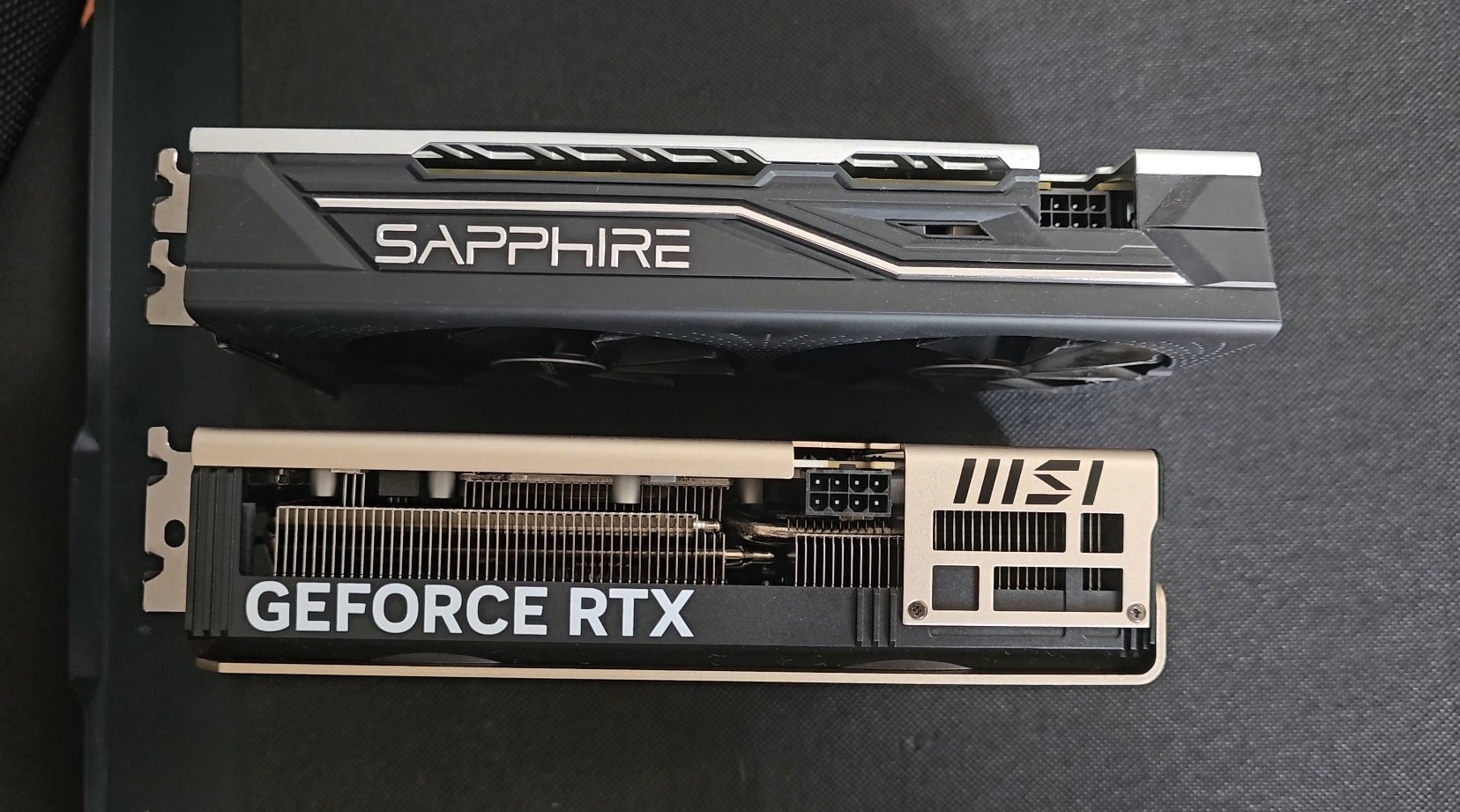
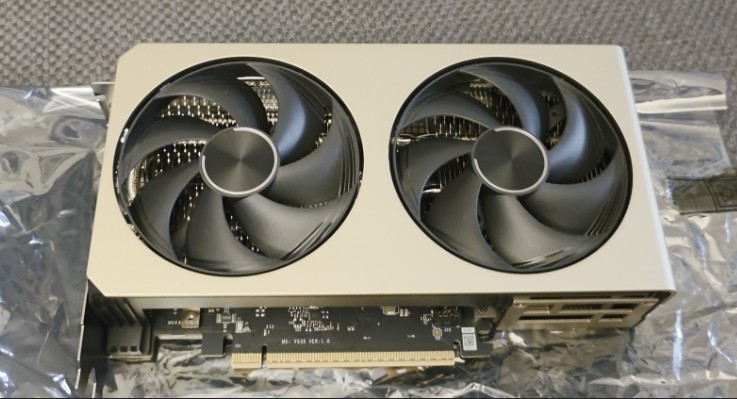
After a long wait, I finally managed to get my hands on a new graphics card: an MSI Inspire 2X RTX 5060 TI with 16GB of VRAM. It’s been a significant upgrade from my old Sapphire Pulse RX 580 4GB, and I want to share my experience with you.
Unboxing the New Beast
The excitement of opening the RTX 5060 TI box was incredible. The MSI Inspire 2X card presents itself with an elegant and robust design, and from the first impression you can tell it’s a product of superior quality compared to my old RX 580. This powerhouse features the NVIDIA RTX 5060 TI GPU with 16GB of GDDR6 memory, 2560 CUDA cores, and a boost clock of up to 2.9 GHz. The dual-fan cooling system ensures excellent thermal management even under heavy loads, making it perfect for both gaming and professional workloads.
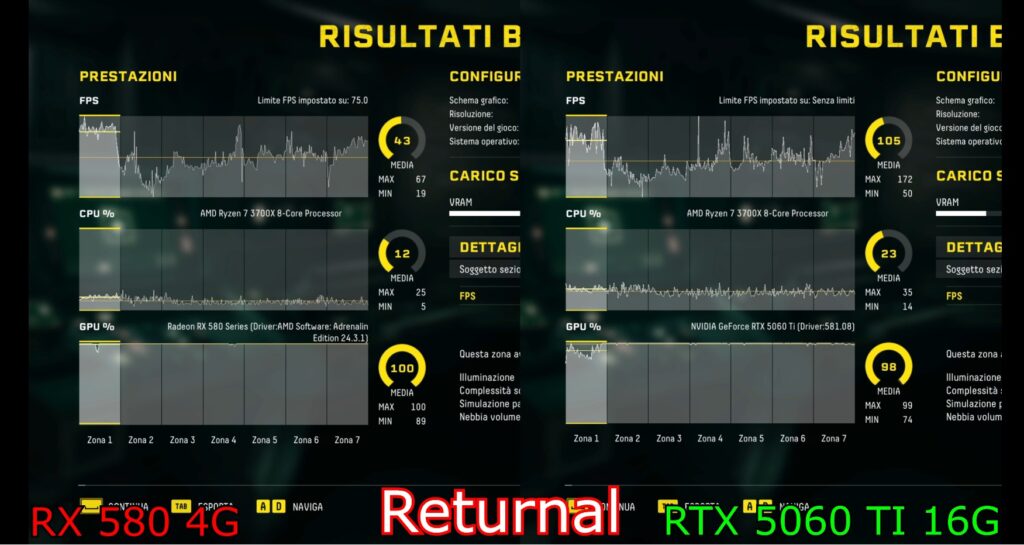
Testing on Returnal: The Difference Is Clear
I decided to put the new GPU to the test right away with Returnal, a game that often challenged my old card. All my tests were performed on my 1080p monitor, and the results were simply stunning: the performance is noticeably superior, with gaming fluidity I had never experienced before. The difference between the two graphics cards is abyssal, especially in terms of frame rate and visual quality. While I’m currently gaming on 1080p, the RTX 5060 TI has more than enough power to handle 1440p gaming as well.
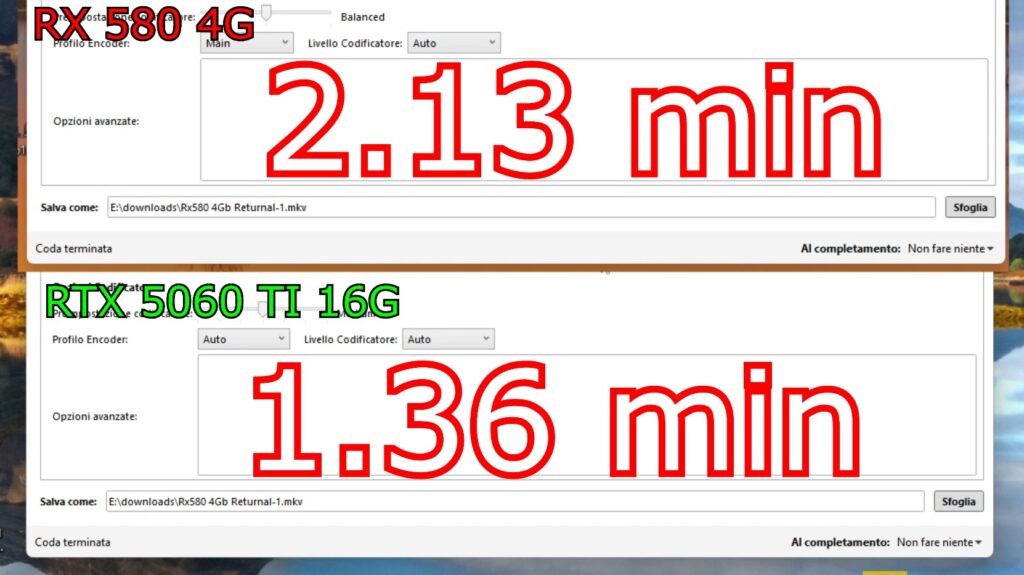
Handbrake: NVENC vs AMD Encoder
Another aspect I tested was video encoding with Handbrake. Here I compared the NVENC encoder of the RTX 5060 TI against the AMD encoder of my old RX 580, and the difference was remarkable. The NVENC encoder not only delivered faster rendering times but also maintained better quality thanks to the 16GB of VRAM and the modern GPU architecture. For those who do video editing or streaming, this upgrade is truly a game-changer.
Superimposition: Advanced Graphics Power
I also tested the superimposition capabilities of the new card, and I must say the efficiency and power of RTX hardware are impressive. Handling multiple layers and complex effects has become a breeze.
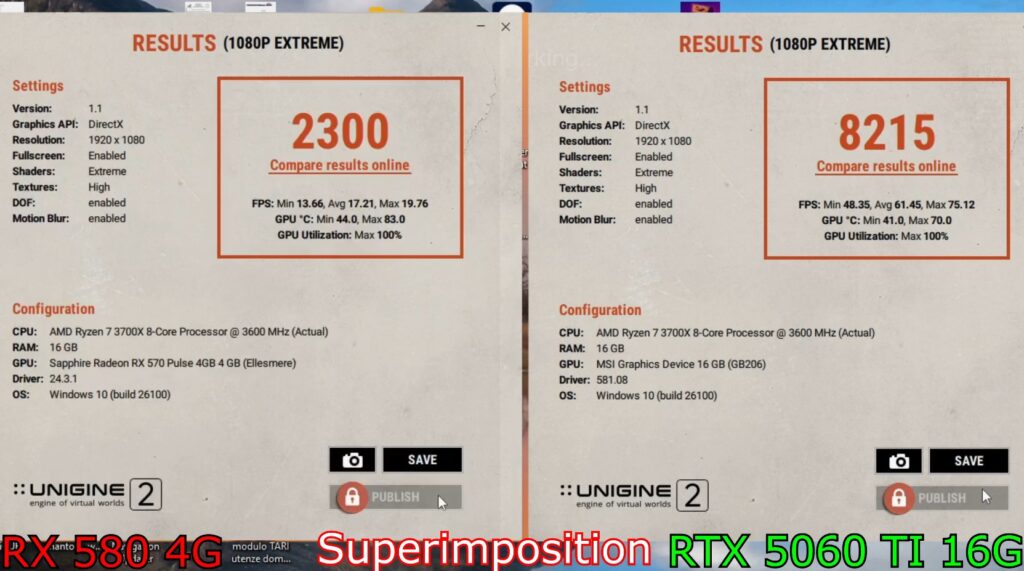
The Power of 16GB VRAM
One of the biggest advantages of this upgrade is the massive 16GB of VRAM. This allows me to play any modern game without worrying about memory limitations, even with high texture settings. But what’s even more exciting is that I can now experiment with AI models that were previously impossible to run on my old 4GB card. The extra VRAM opens up a whole new world of possibilities for machine learning and AI experimentation.
Conclusions: Was It Worth It?
Absolutely yes. The performance jump from the RX 580 4GB to the RTX 5060 TI 16GB has been enormous, especially in gaming and advanced graphics applications. If you’re considering a similar upgrade, I can tell you it’s definitely worth it. The difference is noticeable in every aspect: gaming, rendering, multitasking, and professional use. Plus, knowing that this card can easily handle 1440p when I decide to upgrade my monitor makes it an even better investment.
For those interested, you can buy the card on Amazon. It’s truly been one of the best choices I could make for my setup.